1️⃣ Some Botanicals Have Stronger Evidence Than Others Different plants contain different natural compounds, and their effects depend on the botanical, preparation, dose, and intended use. Some have human clinical research Some have only early scientific evidence Some are mainly supported by traditional use
2️⃣ Traditional Use Still Matters Traditional knowledge can help identify plants worth studying, but tradition alone does not prove a medical effect. Generations of botanical knowledge Valuable cultural and practical experience Best understood alongside modern research
3️⃣ Preparation Can Change the Result A botanical tea, powder, tablet, or extract may not work in exactly the same way. Different concentrations Different active compounds Different methods of preparation This is why clear product information matters.
4️⃣ Science Is Still Catching Up Many botanicals have been studied in laboratories or animals but have fewer high-quality human trials. Early findings can be promising Human evidence may still be limited More research is often needed
5️⃣ Good Old Herbs Believes in Honest Botanical Wellness We do not believe every herb should be called a miracle. Good Old Herbs combines traditional botanical knowledge with modern scientific evidence, helping customers understand what is established, what is promising, and what remains unproven.
Some Botanicals Work. Some May. Science Tells Us Which Is Which. Good Old Herbs — Old botanical knowledge. Made for modern life.

Devil’s Claw (Harpagophytum procumbens)
2️⃣ “Superfood” Is Not a Scientific Classification There is no scientific test that officially makes Moringa a “superfood.” The term is generally used to describe foods and plants with particularly interesting nutritional profiles. No regulated definition of “superfood” Nutritional value can be scientifically measured Scientific evidence matters more than marketing claims So, calling Moringa a superfood is useful shorthand — but it is not an official scientific designation.
3️⃣ Scientists Are Studying Moringa Seriously Moringa has attracted considerable scientific interest. Researchers have studied its naturally occurring compounds and their possible relationship with areas such as antioxidant activity, inflammation, metabolism and cardiovascular health. Rich in biologically active plant compounds Studied across several areas of human health Human clinical research is still developing This makes Moringa scientifically interesting without needing exaggerated claims.
4️⃣ Promising Does Not Mean Proven Some studies have produced promising results, but Moringa should not be presented as a medicine or cure. Clinical research is still developing, and stronger human studies are needed before many health claims can be considered firmly established. Scientific interest is genuine Evidence continues to develop Moringa is not a replacement for medical treatment At Good Old Herbs, we believe consumers deserve to know the difference between traditional use, emerging research and scientifically established fact.
5️⃣ Old Botanical Knowledge. Made for Modern Life. Moringa has been valued for generations, but modern life has changed the way people consume botanicals. Today, Moringa oleifera can be enjoyed in several convenient formats: Powder for smoothies and shakes Tablets for convenient everyday use Tea for a simple botanical ritual Dried leaf for people who prefer the plant closer to its traditional form
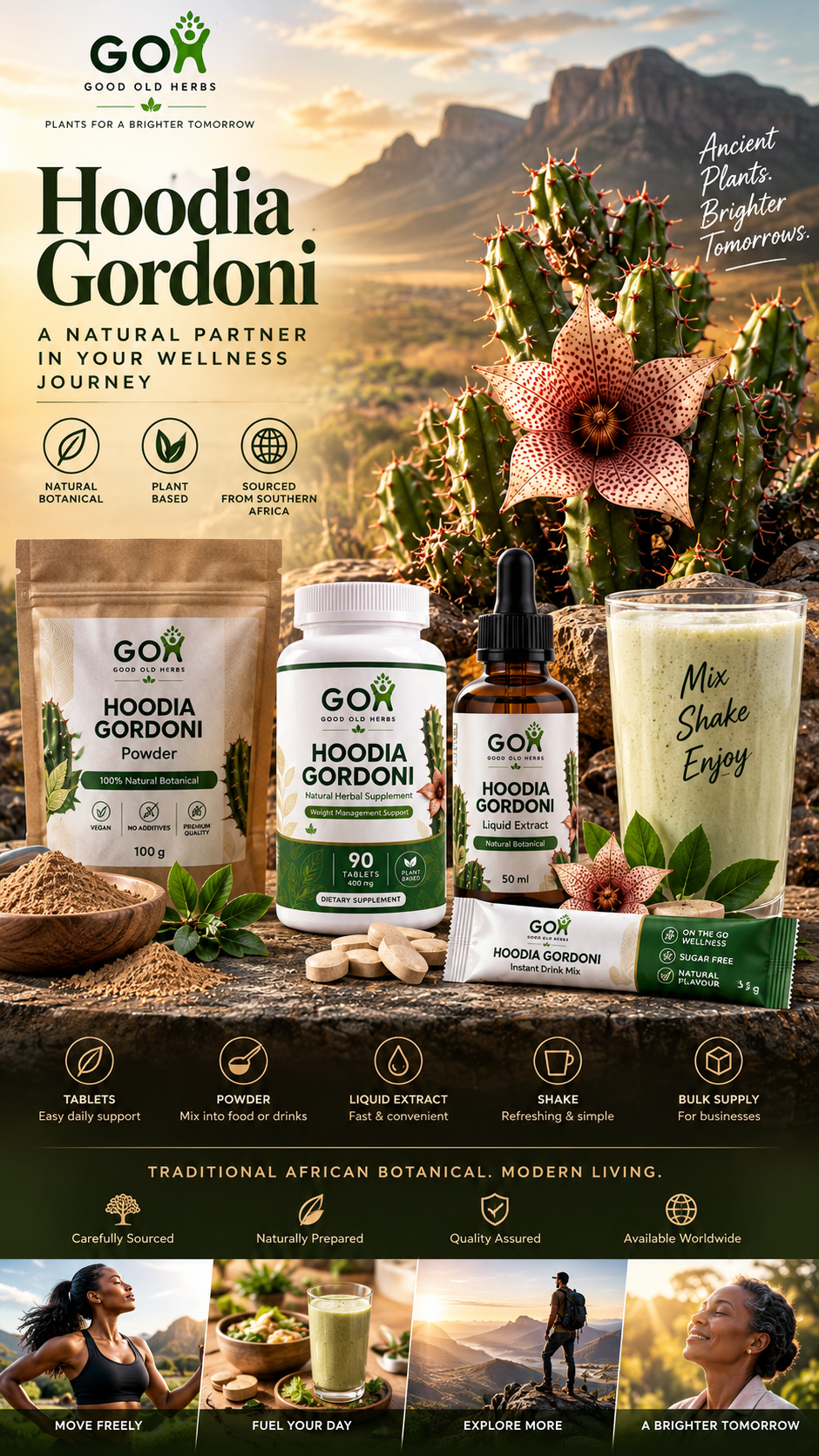
1️⃣ A Remarkable Southern African Botanical Hoodia is a succulent adapted to the harsh, dry landscapes of Southern Africa. Native to the Kalahari region Traditionally used during demanding journeys and hunts Contains naturally occurring steroidal glycosides, including P57 Its unusual chemistry has made Hoodia an important subject of botanical and scientific research.
2️⃣ Why Hoodia Became Famous for Appetite Control Hoodia gained international attention because some of its natural compounds were proposed to influence appetite and satiety. P57 became the best-known Hoodia compound Early laboratory research generated considerable interest Hoodia became widely marketed for weight management However, scientific interest does not automatically mean a health benefit has been clinically proven.
3️⃣ What Human Research Actually Found Human evidence for Hoodia gordonii remains very limited. In the principal randomised controlled human study, 49 overweight women received Hoodia extract or placebo for 15 days. Researchers found no significant reduction in food intake or body weight compared with placebo. Appetite reduction is not clinically established Weight-loss benefits remain unproven More rigorous human research is required
4️⃣ Safety Matters as Much as Benefits The same clinical study also raised safety concerns. Participants receiving the Hoodia extract experienced effects including nausea and vomiting, while researchers observed increases in heart rate, blood pressure and certain laboratory markers. That is why Good Old Herbs does not present Hoodia as a miracle weight-loss product. Botanical heritage deserves respect — and consumers deserve accurate information.
5️⃣ Good Old Herbs: Tradition With Transparency At Good Old Herbs, Hoodia represents something bigger than another fashionable diet ingredient. It represents: Southern African botanical heritage Indigenous knowledge worth understanding A fascinating plant with emerging science The importance of honest botanical information